Indoor Cat Enrichment: DIY Toys, Routines, Home Tips
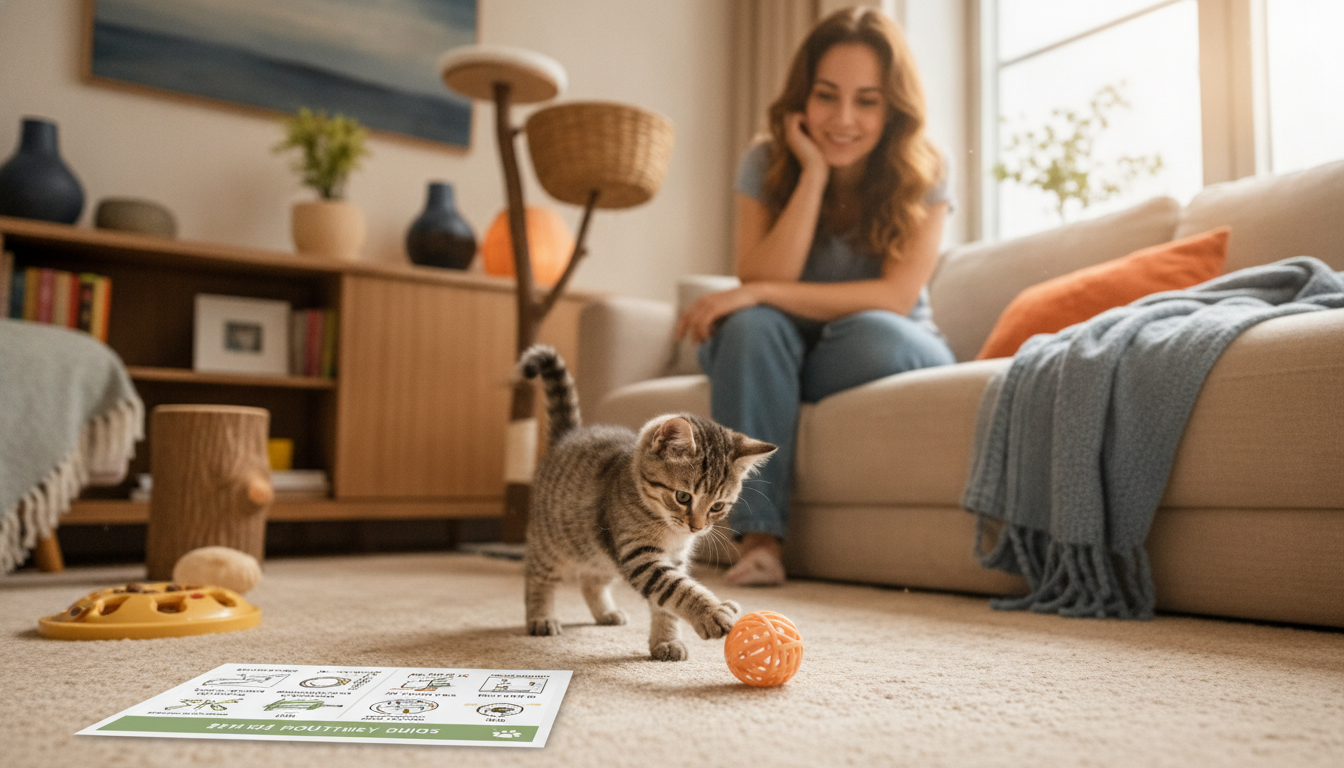
Enrichment Ideas for Indoor Cats: DIY Toys, Play Routines, and Cat-Friendly Home Tips (Printable Guide Included)
Indoor cats thrive when their days include opportunities to hunt, climb, explore, scratch, solve puzzles, and rest in safe, cozy places. A few simple changes—rotating toys, building short play sessions into the day, and setting up vertical space—can reduce boredom behaviors like midnight zoomies, excessive vocalizing, and destructive scratching. The ideas below focus on practical, low-cost enrichment that fits real homes and real schedules, with an optional printable guide to help plan and track routines.
What “enrichment” means for an indoor cat
Enrichment isn’t about constant stimulation—it’s about meeting natural feline needs in a way that feels safe, satisfying, and repeatable.
- Aim to meet natural needs: stalking, pouncing, climbing, scratching, chewing, and scent exploration.
- Balance stimulation with recovery: active bursts followed by calm, safe resting spots.
- Use variety and choice: multiple stations (food, water, scratching, resting) prevent resource guarding and reduce stress in multi-cat homes.
- Watch for feedback: relaxed body language, regular grooming, steady appetite, and fewer attention-seeking behaviors are good signs.
For deeper guidance on the essentials of a supportive indoor environment, the AAFP Feline Environmental Needs Guidelines and International Cat Care’s cat-friendly home tips are strong references.
Quick daily routine: a simple structure that prevents boredom
Think “small, predictable, and complete.” Cats often do best with short play that ends in a “finish” (food or a satisfying catch), followed by downtime.
- Morning (5–10 minutes): wand toy “hunt” ending with a small meal or treat to complete the hunt-eat-groom-sleep cycle.
- Midday (2–5 minutes): micro-enrichment such as treat scatter, a new cardboard box, or a short training cue (sit, touch).
- Evening (10–15 minutes): higher-energy play plus a puzzle feeder or slow feeder to extend eating time.
- Night wind-down: calm grooming, a snuffle mat, or a lickable treat in a quiet spot to reduce late-night zoomies.
- Consistency matters more than duration; two short focused play sessions often outperform one long distracted session.
DIY enrichment toys using household items (safe and cheap)
DIY toys can work beautifully—if they’re simple, replaceable, and safe. When trying a new item, supervise the first few sessions and discard anything that starts to fray, splinter, or break into small swallowable pieces.
- Paper “prey” bundle: crumple paper into a ball, tuck a treat inside, and let the cat bat and rip (remove staples/tape).
- Toilet roll puzzle: fold one end, add kibble, fold the other end; poke a few holes to increase difficulty.
- Box maze: connect two boxes with a cutout tunnel; add crinkly paper and a toy at the end for exploration.
- Sock kicker: fill an old sock with fabric scraps; tie off securely (avoid loose strings, supervise if the cat shreds).
- Bottle cap chase (supervised): a clean plastic cap on hard flooring for quick sprints; remove if the cat tries to chew it.
Interactive play that actually feels like hunting
“Random waving” often loses a cat’s interest. A hunting-style session keeps the brain engaged and reduces frustration.
- Use a wand toy to mimic prey: hide behind furniture edges, vary speed, and include pauses for stalking.
- Keep “wins” frequent: allow catches every 30–90 seconds to prevent frustration.
- End with food: a small portion of dinner or a few treats reinforces the natural sequence and helps the cat settle.
- Rotate toy types weekly: feathers, fabric strips, mouse shapes, and “worm” attachments prevent novelty fade.
- Avoid using hands or feet as toys; redirect biting to kickers and appropriate chew items.
Puzzle feeding and foraging ideas for mental workouts
Food puzzles turn calories into enrichment. The goal is “pleasant challenge,” not frustration—start easy and build complexity as your cat succeeds.
Enrichment menu: pick 1–2 options per day
| Category | Example | Time Needed | Difficulty | Best For |
|---|---|---|---|---|
| Hunt/Play | Wand toy session with “catch + treat” finish | 10–15 min | Medium | High-energy cats, evening zoomies |
| Foraging | Treat scatter in a new room | 2–5 min | Easy | Busy days, beginners |
| Puzzle Feeding | Toilet roll kibble puzzle | 5 min setup | Medium | Food-motivated cats |
| Climbing | Window perch + cat tree route | 0–5 min setup | Easy | Cats that like vertical space |
| Sensory | Catnip/silvervine toy rotation | 1–3 min | Easy | Low-energy or shy cats |
| Calm Enrichment | Lickable treat on a mat in a quiet corner | 3–8 min | Easy | Anxious cats, bedtime settling |
Build a cat-friendly home: vertical space, scratching, and safe hideouts
Scent, sound, and novelty: small changes that matter
Tailor enrichment to personality and age
Common signs an indoor cat needs more enrichment (and what to try next)
Printable routine support: plan, rotate, and track progress
Recommended printable guides (digital downloads)
- Printable cat enrichment guide with DIY toys and play routines
- Guide to understanding cat temperament and behavior patterns
- Pet adoption decision workbook (for planning routines before bringing a new cat home)
FAQ
How much play time does an indoor cat need each day?
Many indoor cats do well with about 15–30 minutes total per day, split into 2–3 short sessions. Adjust based on age, health, and energy level, and focus on “hunt-style” play that ends with a small food reward.
What are safe DIY enrichment toys for cats?
Low-risk options include paper balls, toilet roll kibble puzzles, and simple box mazes. Avoid strings, rubber bands, small chewable parts, and adhesives; supervise new items and discard them when damaged.
Why does my indoor cat get the zoomies at night?
Many cats are naturally more active at dawn and dusk, and pent-up daytime energy can spill into nighttime bursts. An evening hunt-play-food routine plus a calm wind-down activity often reduces late-night zoomies.











Leave a comment